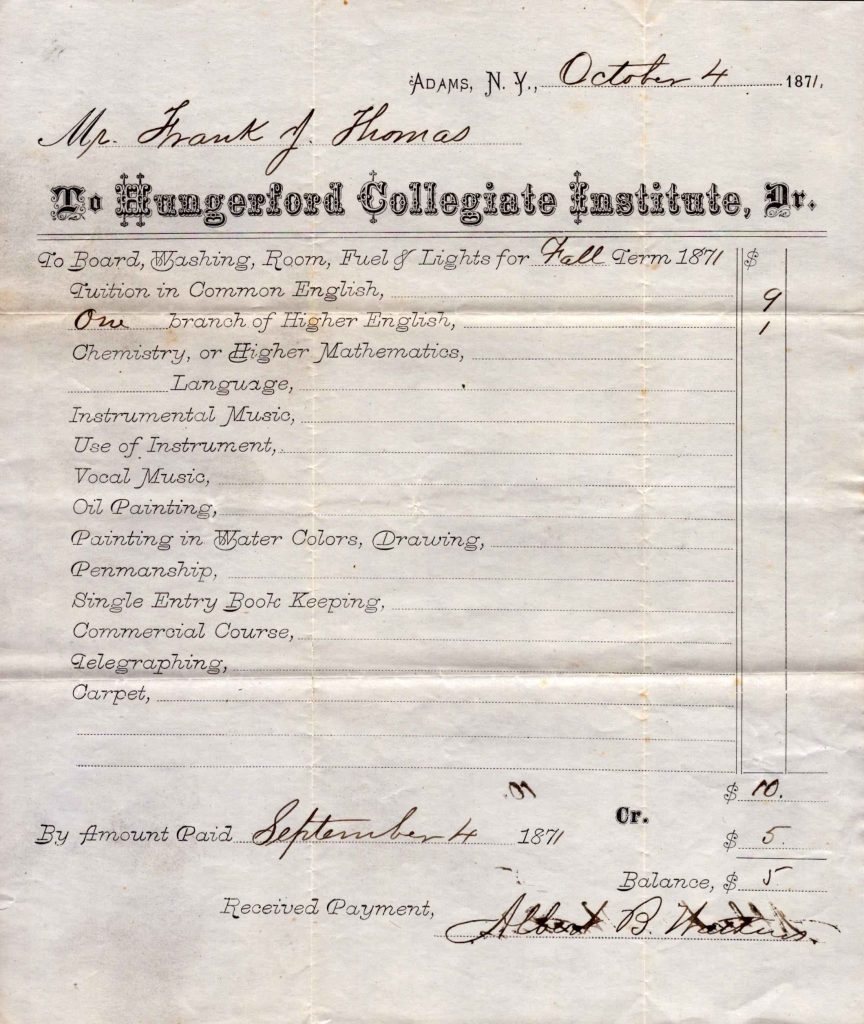
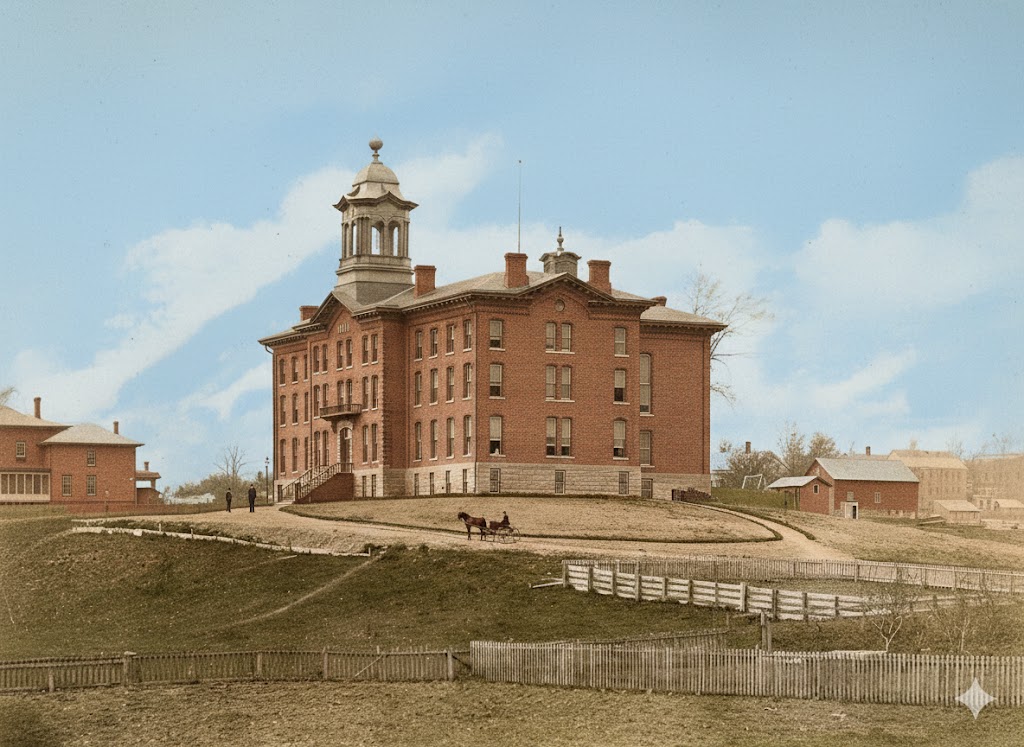
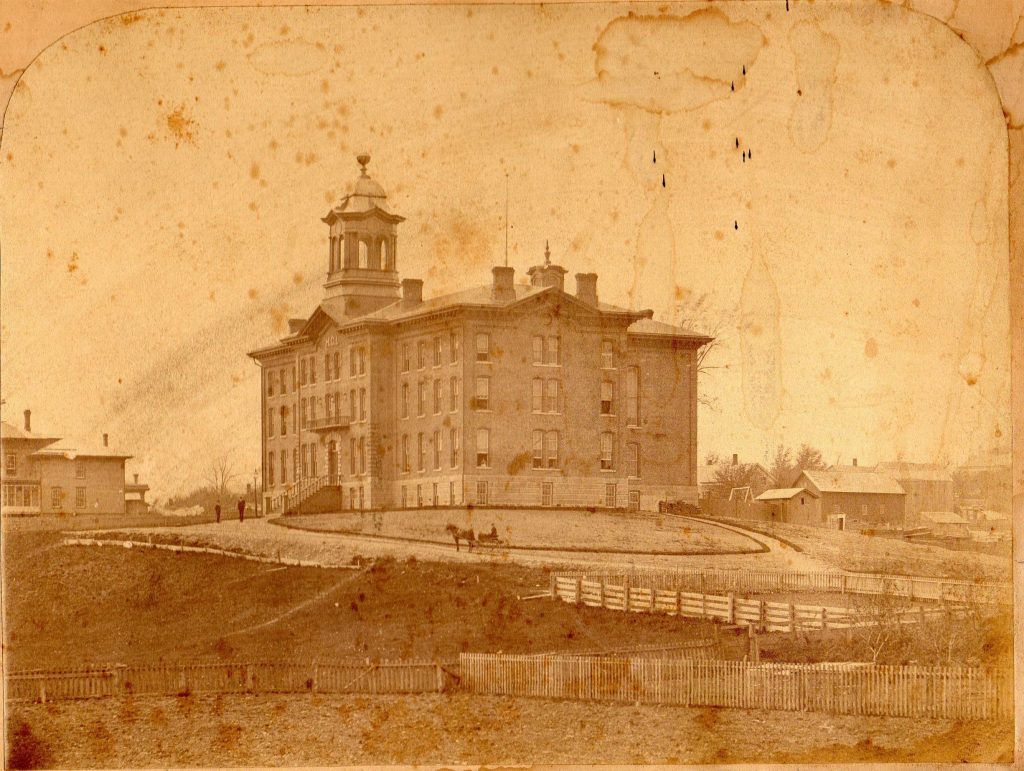
State Regents Approve Adams Collegiate Institute in 1855 – Later Formalized As Hungerford Collegiate Institute in 1864
What is an institution without a physical location? Before becoming the Hungerford Collegiate Institute, the New York State Board of Regents approved the incorporation of the Adams Collegiate Institute in 1855; however, it existed only in its preliminary stages and without a physical location.
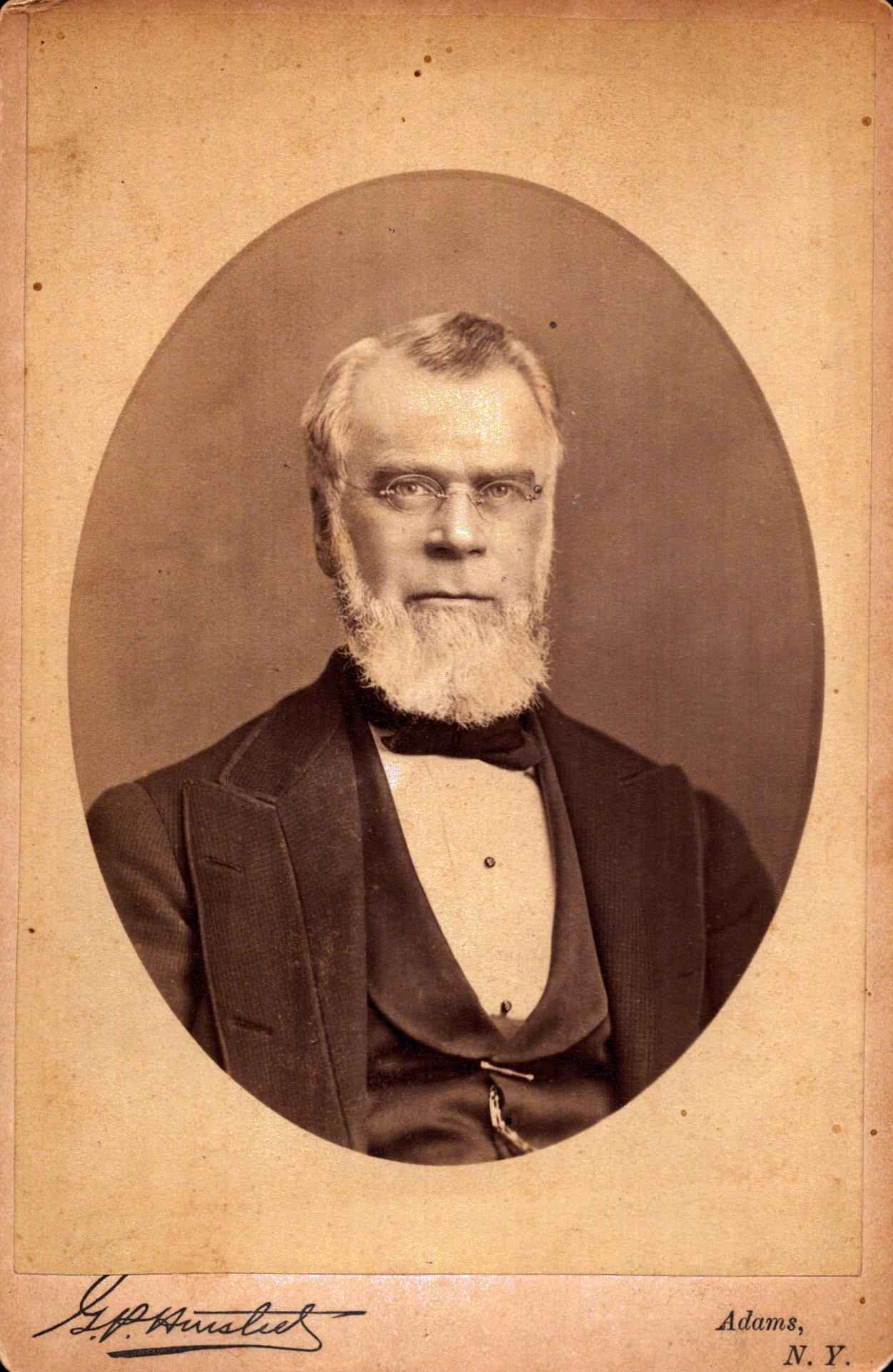
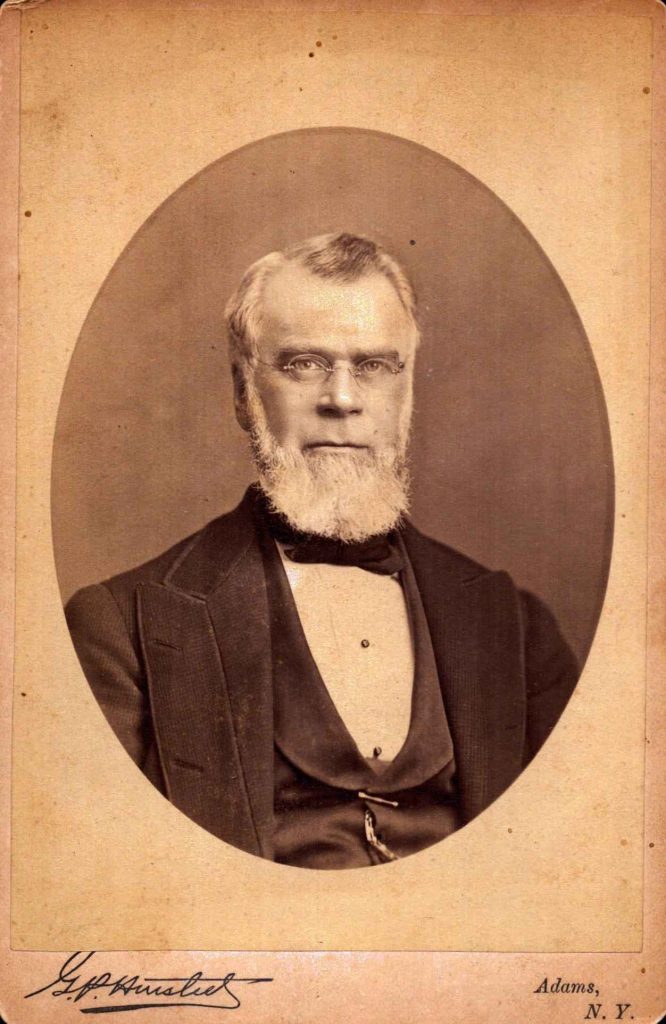
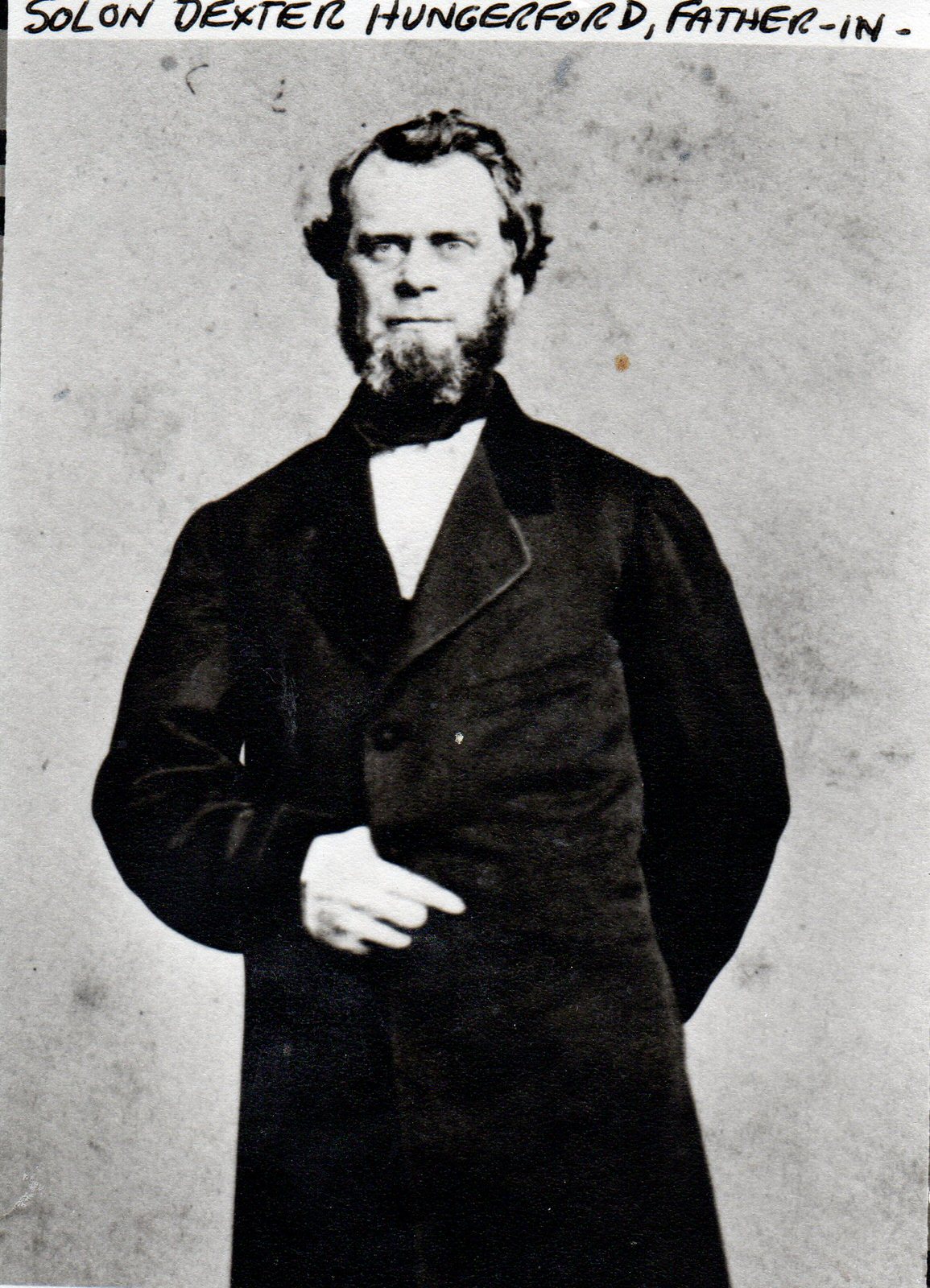
The project remained in limbo until 1859, when General Solon D. Hungerford presented a transformative proposal to the board of trustees through Justus Eddy, offering to deed the Sidney J. Mendall hotel property to the trustees for use as the school. One stipulation was that, if the trustees should happen to sell the property at some point, the proceeds were required to be reinvested into the construction of a new academy building within one mile of Hungerford’s own residence.
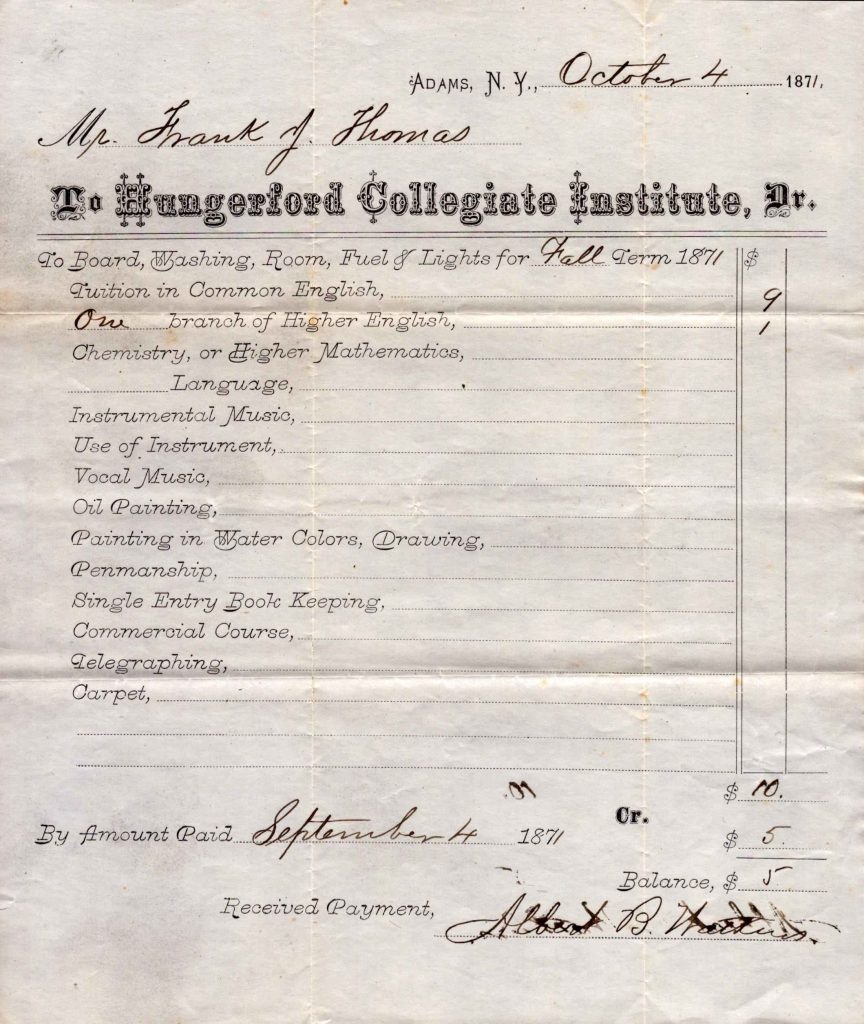
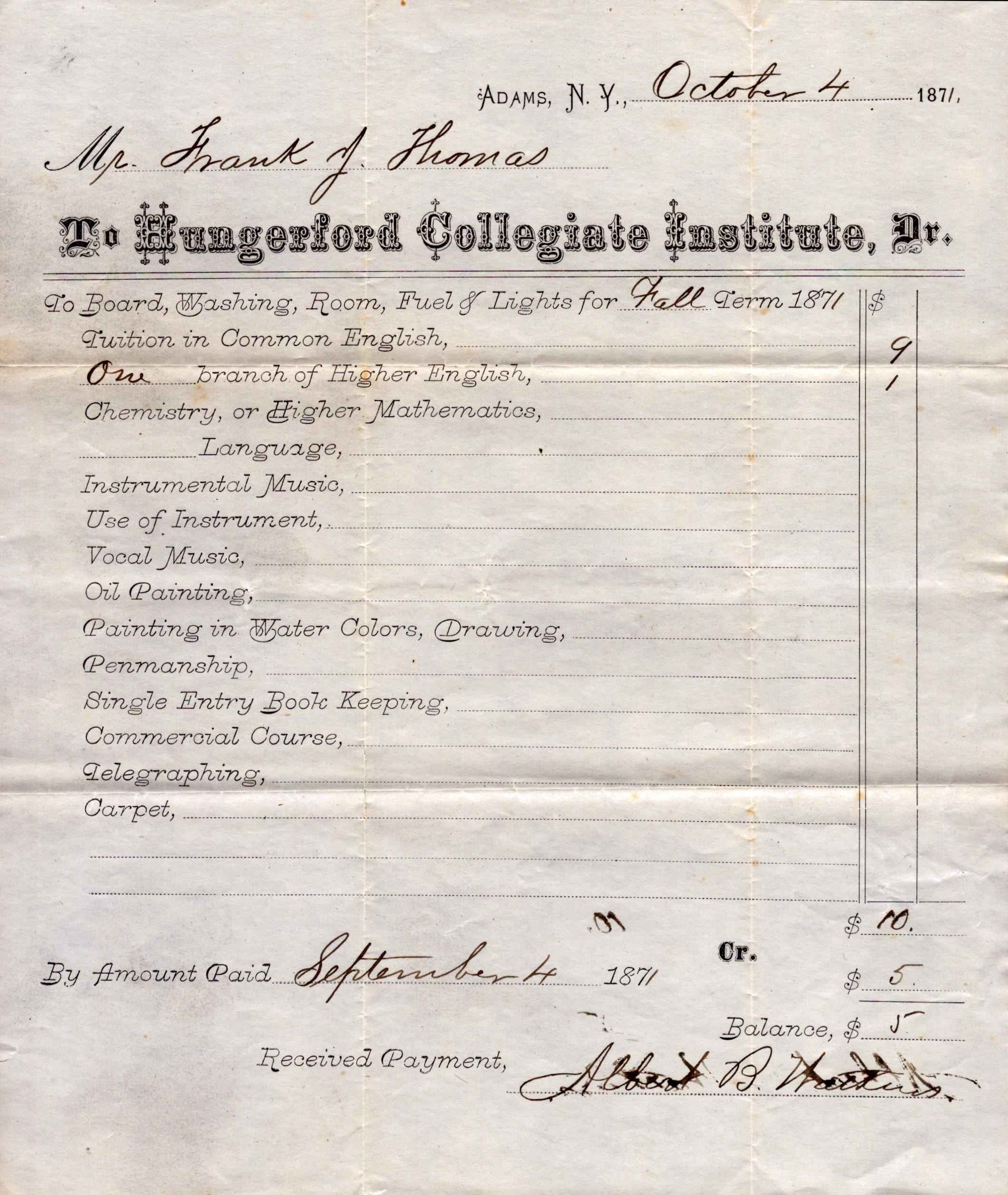
The Civil War delayed action, and in 1863, the community accepted Hungerford’s offer, subscribing a total of $10,568, and, nearly a year later, resolved to petition the Regents to change the institution’s name to the Hungerford Collegiate Institute. The school officially opened its doors on September 8, 1864, with the Reverend J. Dunbar Houghton serving as Principal. The repurposed hotel building, located near the railroad depot, soon became a landmark of the village . . . until tragedy struck.
On January 29, 1868, the original building was completely consumed by fire and declared a total loss. $13,400 from its insurance policies was eventually paid to the trustees, who proceeded with plans for the new facility to be built to suit the purpose of an academy. Of note during the 1868 fire was a sixteen-year-old student named Melvil Dewey.
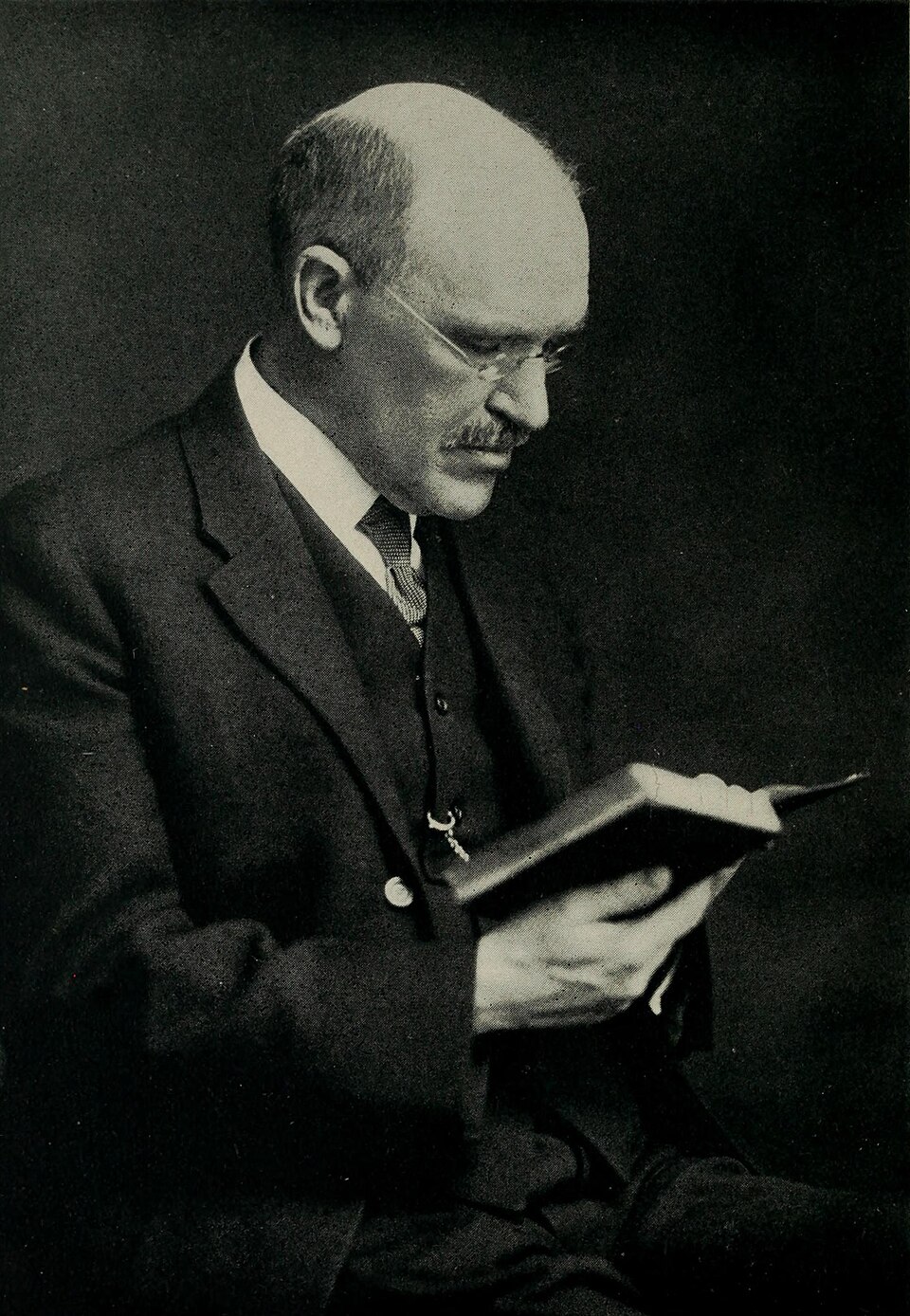
Dewey, enrolled at the institute, is credited with carrying as many books as possible out of the library as it burned. Dewey didn’t escape the conflagration unharmed; smoke inhalation and winter’s cold left him with a debilitating cough that had many, including his doctors, expecting his imminent demise. Bedridden for months, Melvil Dewey not only survived but went on to develop the Dewey Decimal System and later became the President of the American Library Association.
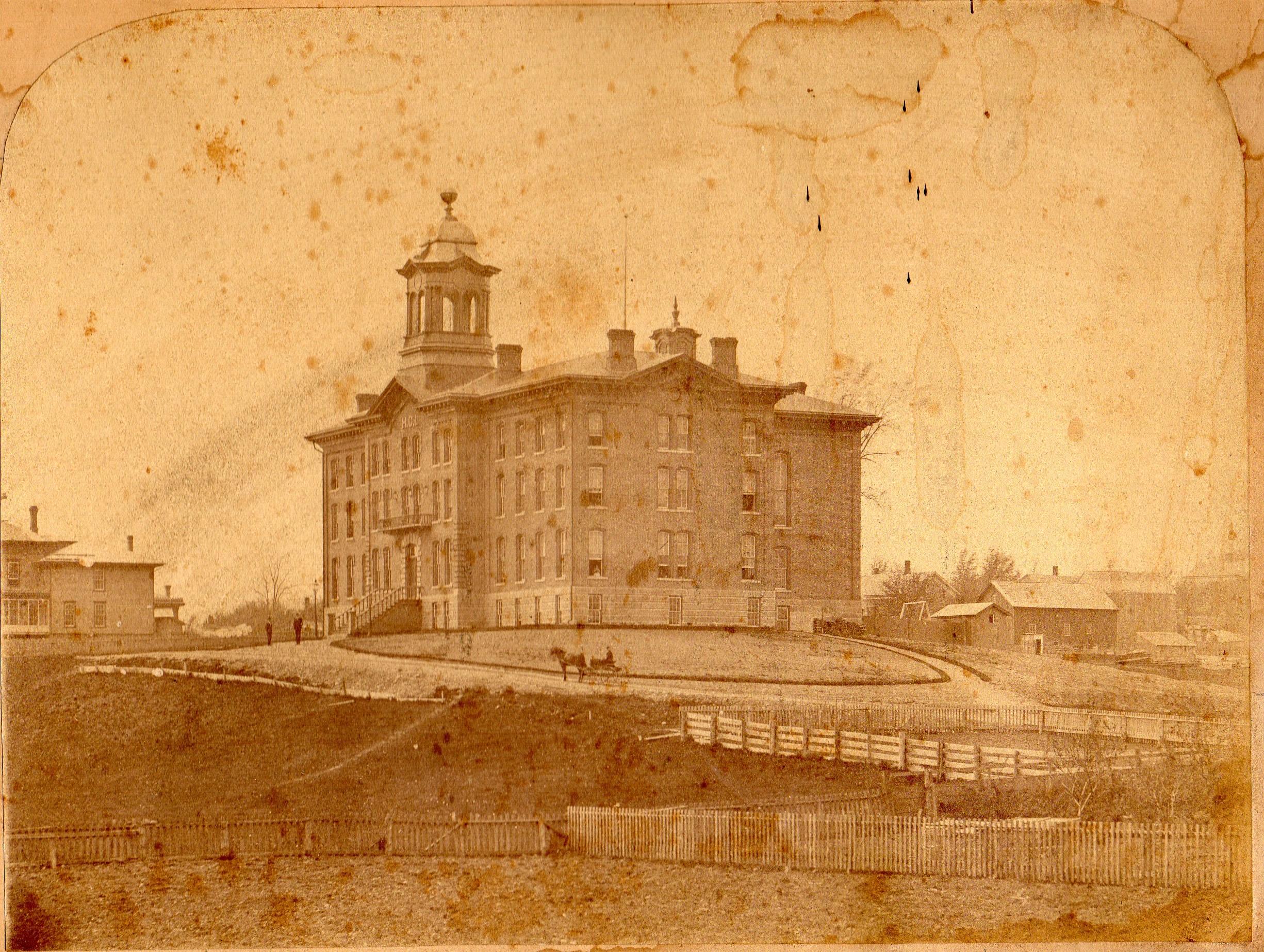
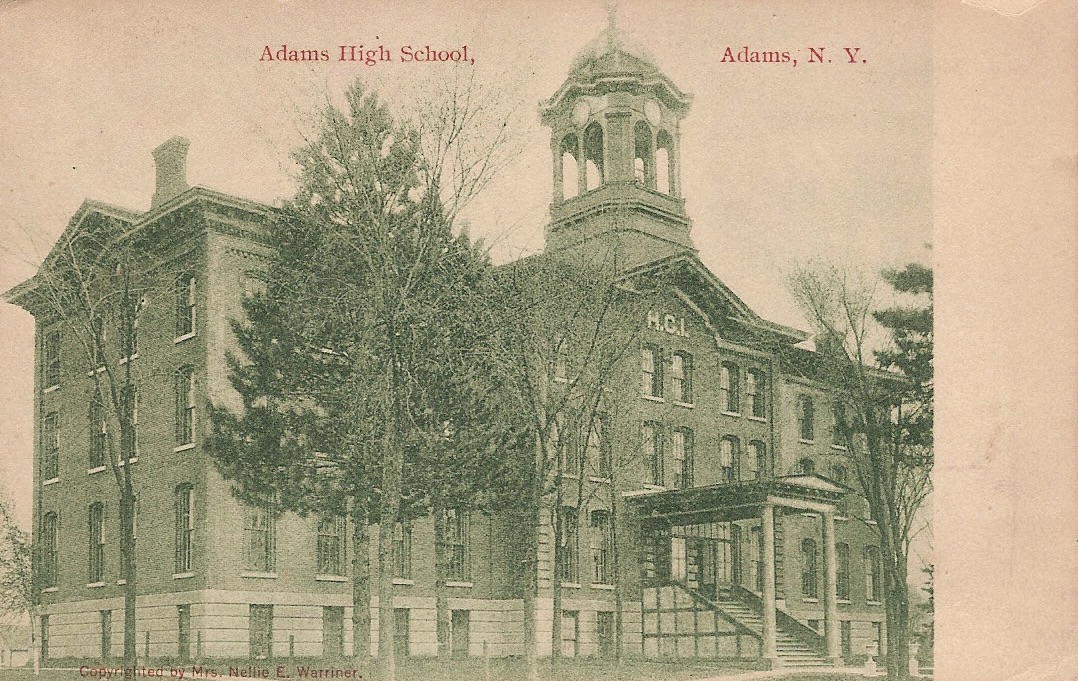
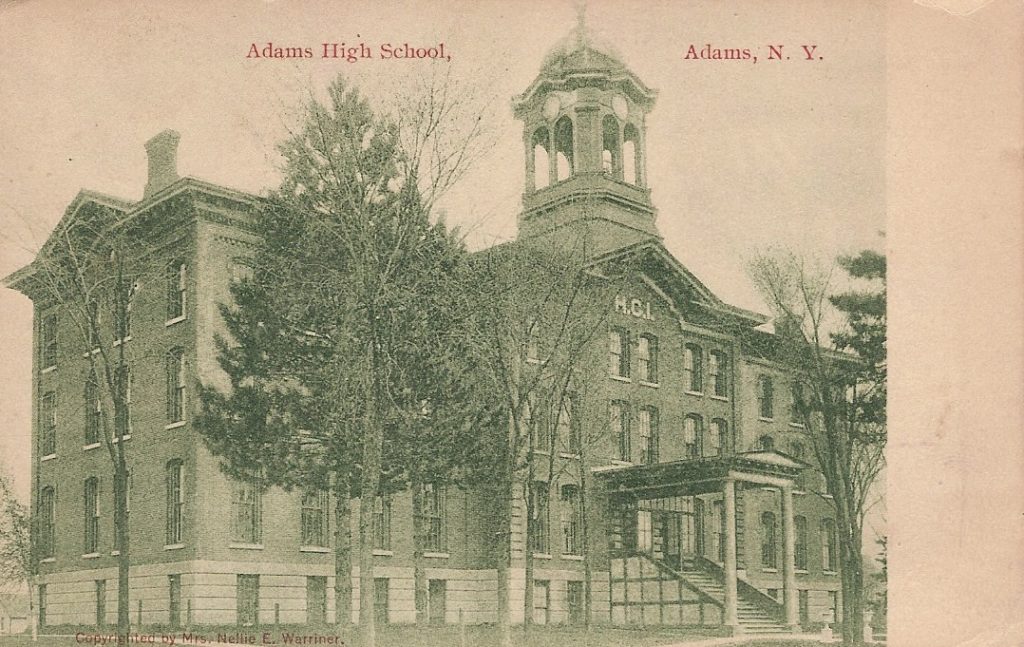
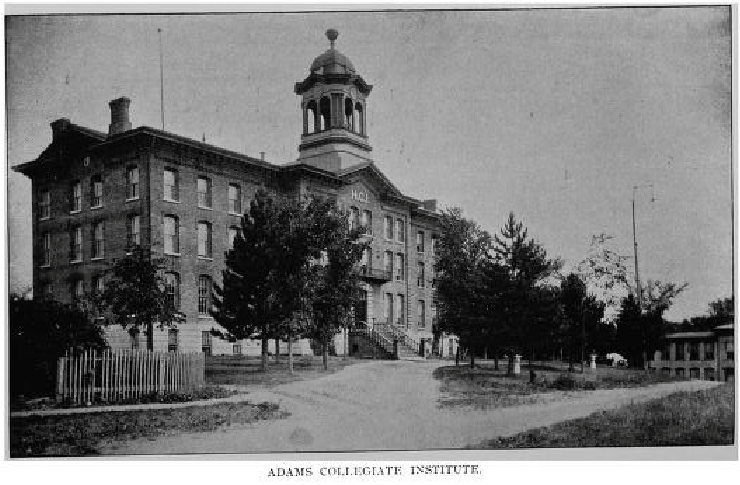
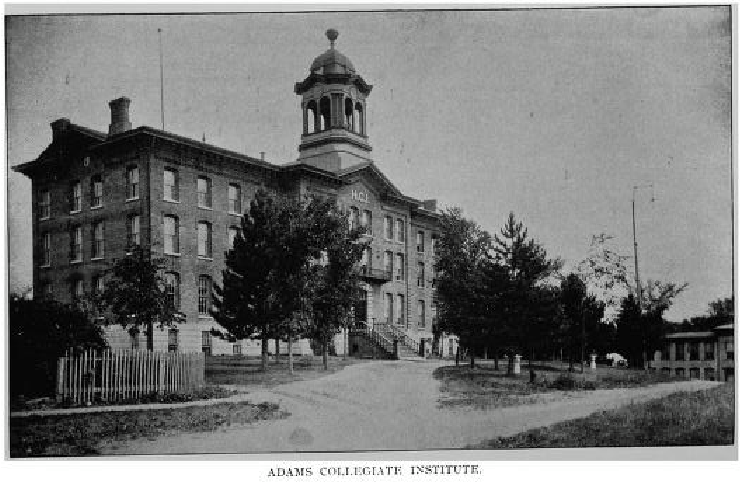
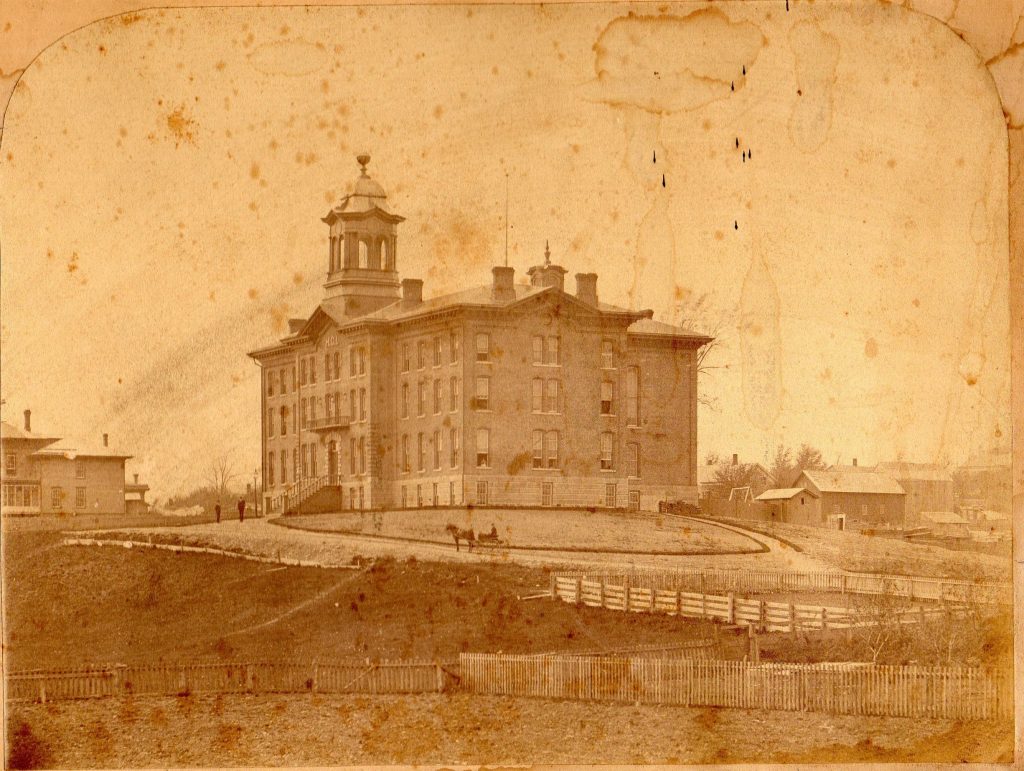
Designed as a state-of-the-art facility, the new Hungerford Collegiate Institute began construction in mid-1868, with up to $20,000 authorized to build a “college-level” institution with boarding for 60 students while accommodating up to 200 pupils. The building, constructed on Institute Street, officially opened on August 28, 1870, and became the Adams’ crown jewel.
As for studies, the curriculum reflected the high standards of the Board of Regents, offering six distinct courses of study: Classical, English, College Preparatory, Scientific/Engineering, Commercial, and Music.
As a private academy, the Hungerford Collegiate Institute faced many of the same financial uncertainties that other private institutions were burdened with in the late nineteenth century. The costs of maintaining the large boarding hall and faculty often exceeded the revenue brought in from tuition, and by 1882, the building was sold for debt attributed to plumbing work, forcing the institution to vacate its modern building for the confines of the Cooper Block in the business center of the village, where its original name, Adams Collegiate Institute, was restored by the Board of Regents on November 16, 1883.
Less than a year later, on August 28, 1884, the Cooper Block was destroyed by fire. This, however, resulted in the institute returning to its original building, for the Cooper block was owned by Solon D. Hungerford’s close associate (and neighbor), DeAlton Dwight, who applied the insurance money from the Cooper Block to pay off the debts for the building on Institute Street. With its return, the “Hungerford Collegiate Institute” was restored. The Dwights offered the building to the Presbyterian denomination of Adams, under the condition that it be used for school purposes forever.
While the school continued to operate as a private academy into the late 1880s, the changing landscape of education in New York State, which saw a shift toward the “Union School” model and the centralization of public secondary education, made it difficult to compete with taxpayer-funded high schools without the burden of private tuition. The Hungerford Collegiate Institute eventually transitioned into the public model and, by the early 1920s, was now known as the Adams High School.
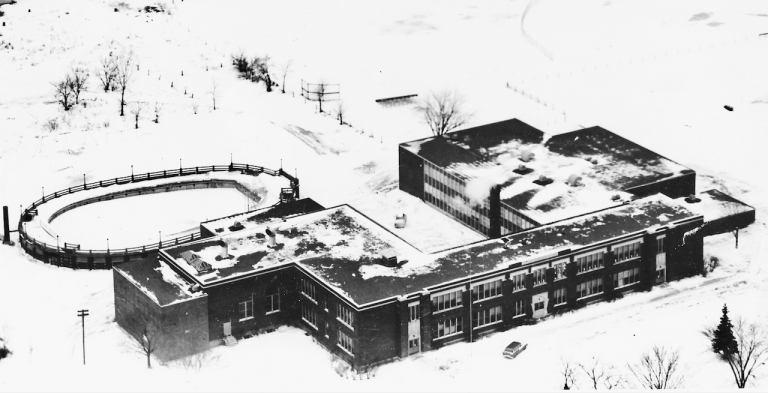
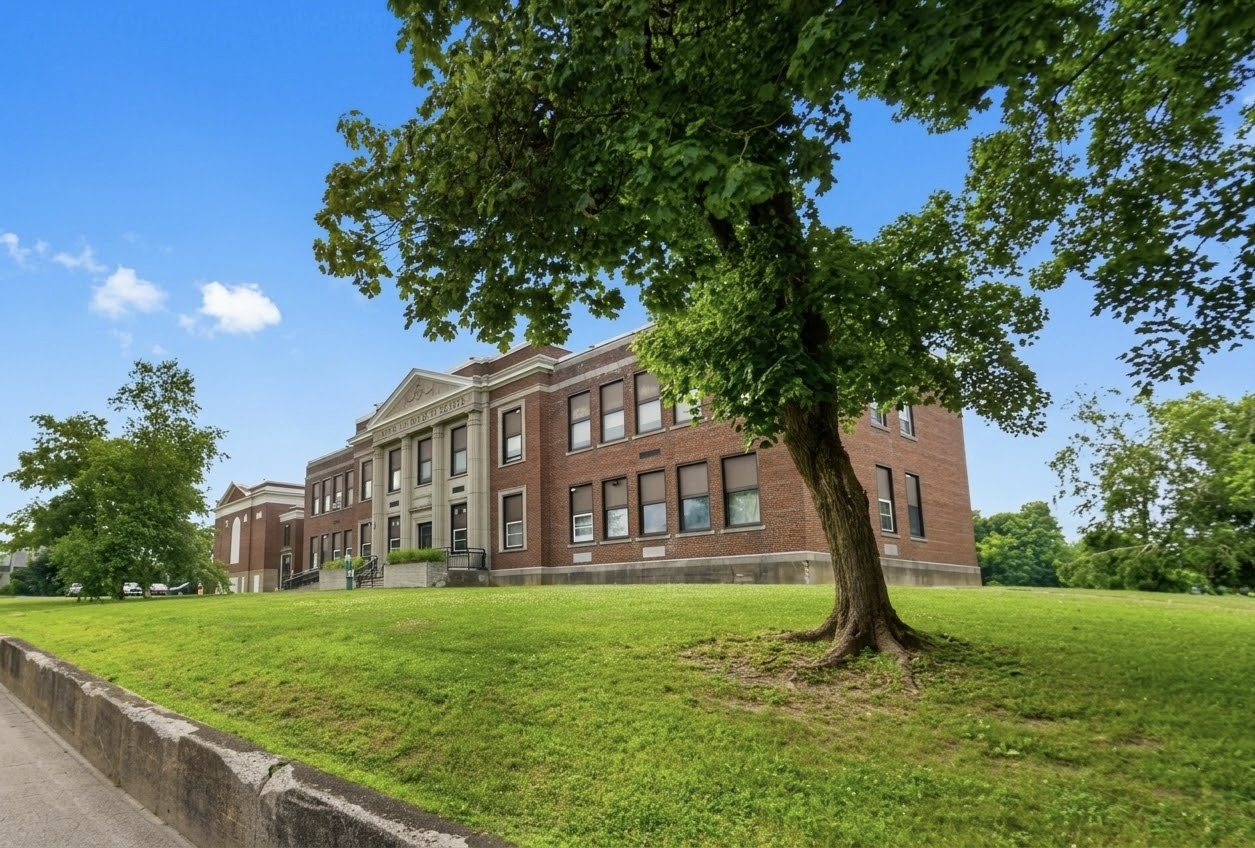
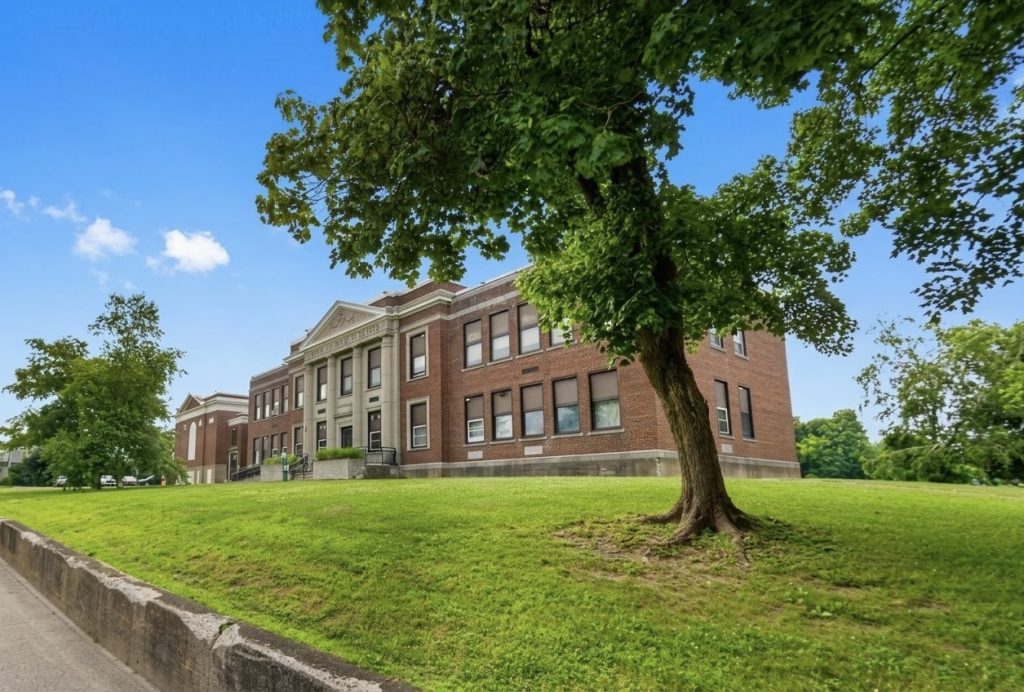
During the 1920s, additions were added onto the original building, but a windstorm in 1938 damaged numerous windows, resulting in a third-floor wall collapsing. The Watertown Daily Times announced in its October 27, 1938, edition that groundbreaking for a new school had begun—
The $194,994 P. W. A. project to build a new school here opened this morning with groundbreaking ceremonies at the school site at 10. Dr. H. L. Richmond, president of the board of education, turned the first shovelful of earth to mark the beginning of a job that will be finished about next July 24.
Clyde Fishbeck, chairman of the school building committee; Roy R. Allen, high school principal, and the building contractors, Laplenta and Gressani, of Syracuse, took part in the ceremonies.
Two gangs of men started on the nine-month undertaking immediately after the official ground-breaking. Once crew began demolishing the main part of the present school building which is to be replaced with a new structure. The other group of workmen started excavating beneath the gymnasium-auditorium, which was built in 1923, in preparation for constructing a cafeteria, shower and locker rooms.
The main part of the present school, built 70 years ago as a boarding school, housed the old Adams Collegiate Institute and the Hungerford Collegiate Institute in the years before it was used as the Adams High School. In its place will be constructed a somewhat larger building designed by Architect Gordon Wright of Syracuse to contain 23 classrooms.
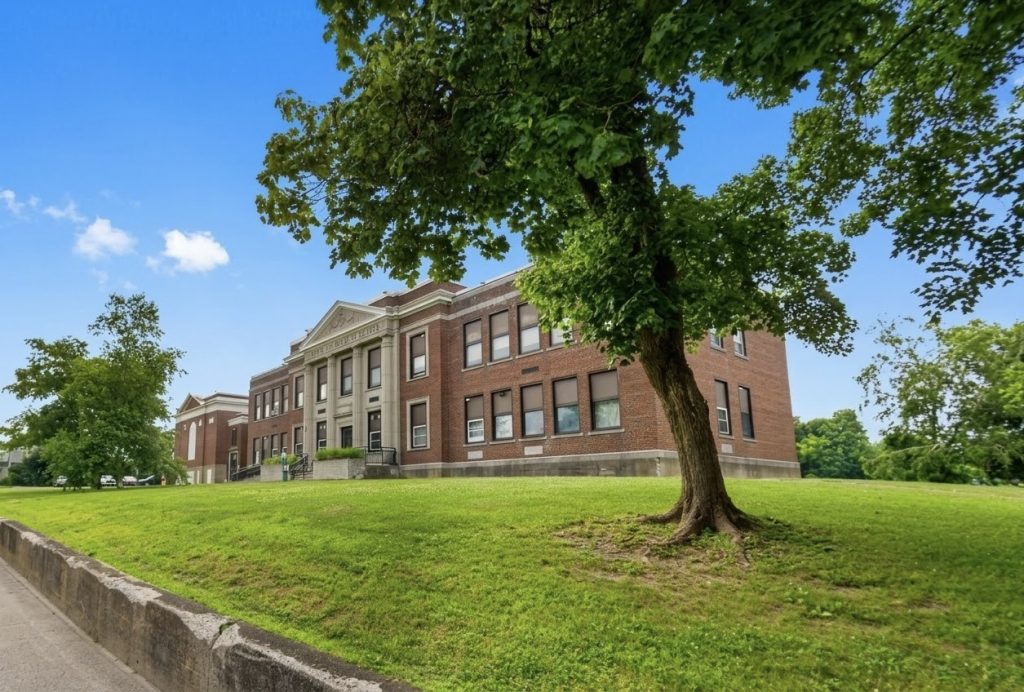
The current building continued as a high school until the “new” and current South Jefferson High School was completed. The building on Institute Street has, in recent years, been repurposed into the Pinehurst Apartments.
The history of the Hungerford Collegiate Institute is a microcosm of the American educational experience in the nineteenth century. It illustrates the critical role of private philanthropy in establishing institutions of learning before the state-mandated public high school system became the norm.
General Solon D. Hungerford’s commitment to education was born from his own lack of classical training, a motivation that drove him to create the Hungerford Collegiate Institute, and was most likely influenced by his Uncle Orville’s creation of the first Female Seminary/Academy in Watertown, N.Y., in 1826 — a private institution that operated until 1839.